Do Elevator and Lift Mean the Same Thing?
In everyday building language, elevator and lift usually refer to the same type of vertical transportation equipment: a car or platform that moves people or goods between levels. The difference is most often regional vocabulary rather than a different machine.
On an international project, however, a single word is not enough to define the requirement. Passenger use, goods movement, beds, accessibility, travel, doors and building interfaces all need to be described separately.
- Same broad vertical-mobility concept
- Different regional word preference
- Application details still need definition
Where Each Term Is Commonly Used
Elevator is common in the United States, Canada and many international product descriptions. Lift is standard in the United Kingdom and widely used across Europe, the Middle East, Asia and other markets influenced by British English.
Search behaviour follows the same pattern. FUJI elevator and FUJI lift may be used by different buyers who are looking for similar solutions. FUJI Nihon uses both terms so project teams can find the right information without changing the technical meaning.
- Elevator: common in North American English
- Lift: common in British and international English
- Both: understood in global B2B communication
What to Write in an International Project Brief
Use the terminology familiar to your project team, then add the application and key movement needs. “Passenger lift for a 12-storey office building” communicates more than the word lift alone. “Bed elevator for patient and equipment movement” makes the healthcare use clear.
A first brief can also include location, floors, quantity, expected users, accessibility needs, project stage and any available drawings. Final terminology and specifications should align with the rules and professional documentation used in the project location.
- Name the application
- Describe users and movement
- Add floors, quantity and location
- Confirm local professional terminology
Passenger, Bed, Home and Service Lift Terminology
Application labels provide the useful distinction. Passenger elevators or lifts carry building users. Bed lifts support healthcare movement. Home lifts serve private residences. Service or goods equipment may prioritize operational loads, robust finishes and different circulation routes.
Names vary between markets, and similar labels can still hide different requirements. Treat the label as the start of the conversation and confirm the building use before selecting a product family.
- Passenger elevator or passenger lift
- Hospital elevator or bed lift
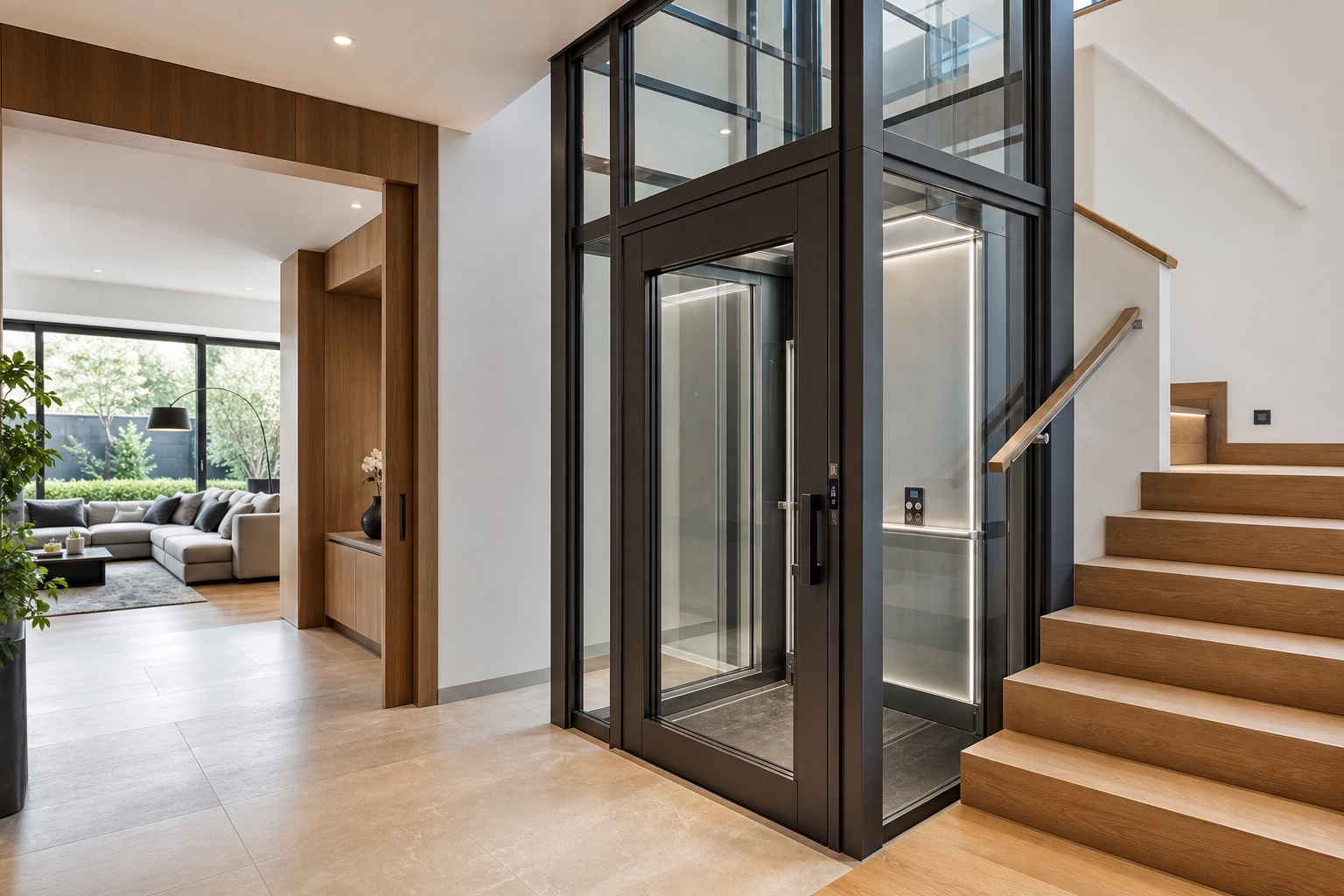
- Residential elevator or home lift
- Service or goods movement equipment
How FUJI Nihon Uses Elevator and Lift
FUJI Nihon uses elevator in product-family names and lift where it is the natural language of the audience or application. The purpose is clarity for international project teams, not to suggest two unrelated product ranges.
Whether your enquiry says FUJI elevator or FUJI lift, the useful next step is the same: describe the building, users, movement needs and project stage so the discussion can focus on the actual requirement.
- Clear international terminology
- One application-led planning approach
- Project context before equipment selection
Project-specific engineering, compliance and final selection must be confirmed for the actual building and the requirements that apply in its location.